
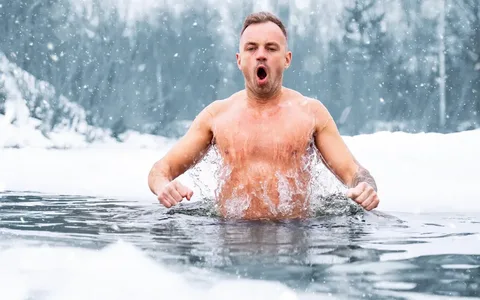
Cold plunges have gone from a niche recovery tool used in professional sports facilities and Scandinavian wellness traditions to a mainstream phenomenon in the space of about three years. Social media has played its role, as it reliably does, amplifying the most extreme versions of cold exposure and attaching celebrity endorsements to what is fundamentally a physiological intervention with a well-established and considerably more nuanced evidence base than the content suggests.
The evidence, when you strip away the theatrics and the dramatic plunge videos, is genuinely interesting. And understanding what it actually shows helps you use cold exposure in a way that produces real benefit rather than just a story to tell.
Cold water immersion, defined as immersion in water below approximately 15 degrees Celsius for a meaningful duration, produces several well-documented physiological effects. The most immediate is a sharp release of norepinephrine, a neurotransmitter that functions both in the nervous system and the bloodstream. The surge in norepinephrine produced by cold exposure measurably improves mood and mental alertness, with effects that persist for several hours after the exposure. This is the basis for the reported clarity and focus that most people experience after a cold plunge.
The inflammatory response is the second major mechanism. Cold immersion reduces the markers of muscle inflammation that accumulate after training. This is relevant for recovery between sessions, as it accelerates the clearance of the acute inflammatory mediators that contribute to delayed onset muscle soreness. Used consistently after training, cold exposure reduces the soreness that would otherwise impair the quality of the next session.
The vagal nerve activation is the third mechanism and arguably the one with the most wide-ranging implications. The vagal nerve is the primary circuit of the parasympathetic nervous system, the system responsible for the rest and recovery state. Cold exposure activates it directly, promoting the shift from sympathetic to parasympathetic dominance that is the biological foundation of genuine recovery. For someone who has been in a high-stress activation state for most of the working day, this shift matters.
There is an important nuance worth knowing. Cold exposure used immediately after resistance training may blunt some of the acute inflammatory response that is actually part of the muscle-building signal. The inflammation produced by strength training is not purely damaging. It is part of how the body communicates to itself that adaptation is needed. Using cold immersion in the immediate post-session window for strength training specifically may therefore reduce some of the intended training effect. The practical guidance from researchers in this area is to separate cold exposure from strength training by several hours, or to use it primarily on rest days or after conditioning rather than heavy lifting.
Used thoughtfully, cold exposure is a well-supported tool. The evidence for its mood effects is strong. The evidence for its role in improving sleep quality and stress resilience with regular use over weeks is growing. The evidence for its effect on delaying neuromuscular fatigue in subsequent training sessions is solid.
This is why quality training facilities are adding ice plunges to their recovery infrastructure. A gym in Andheri West, Mumbai that offers a properly maintained cold plunge alongside sauna and steam is giving its members access to a recovery combination that the evidence strongly supports. The value is in using it consistently and intelligently, not dramatically.
The hype, as always, has outrun the evidence. But in this case, the evidence is genuinely good enough to justify the investment in time and the initial discomfort of the practice.
In Summary
The broader lesson from the cold exposure conversation applies to most wellness trends: separate the mechanism from the marketing. The mechanism, in the case of cold exposure, is genuinely interesting and well-supported. The marketing has attached to it a level of drama and identity that the science does not require. Use the tool. Ignore the theatre around it. And if your facility has a properly maintained cold plunge available alongside a sauna, consider alternating between the two rather than using either in isolation. The circulatory response to alternating heat and cold is more pronounced than either alone, and it is the application that most of the elite sports facilities that originally developed these protocols use as standard practice.